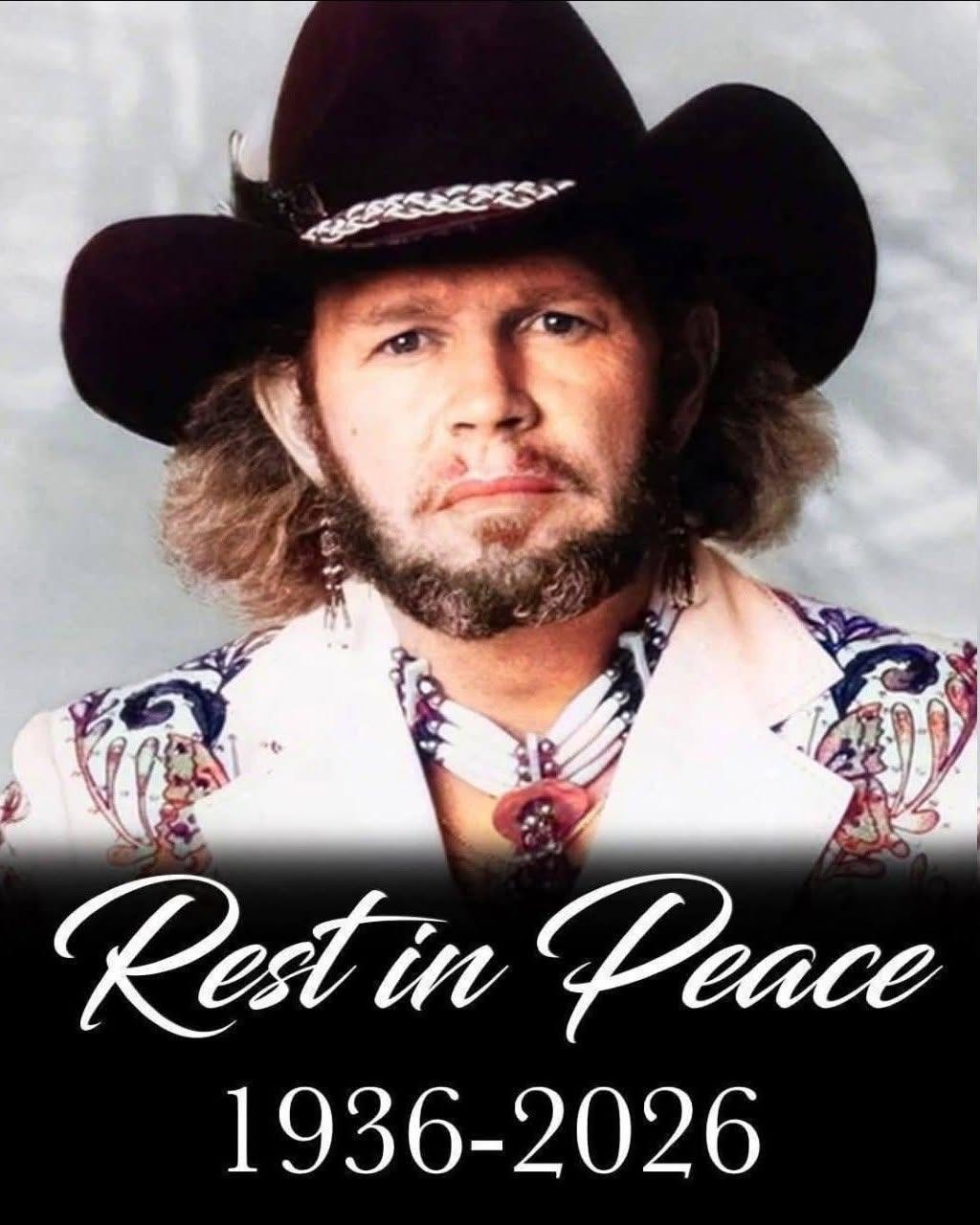
David Allan Coe, Outlaw Country Music Legend Behind “Take This Job and Shove It,” Dies at 86
David Allan Coe, the controversial and influential country singer-songwriter behind “Take This Job and Shove It,” “The Ride,” and “You Never Even Called Me by My Name,” has died at age 86.
The news marks the passing of one of the most unconventional figures in American country music. Coe built a career that was impossible to separate from controversy, rebellion, and a distinctive songwriting style that influenced generations of country performers.
According to CBS News, Coe died in a hospital at approximately 5 p.m. on Wednesday. His manager, David Wade, confirmed the death, while the cause of death was not disclosed.
His death has prompted renewed attention to the complicated legacy of a musician who never fit comfortably inside Nashville’s traditional boundaries.
David Allan Coe’s Death Confirmed at 86
Coe’s manager confirmed his death to CBS News, describing him as a complicated man, an outlaw, songwriter, singer, and showman whose music reached fans around the world.
His wife, Kimberly Hastings Coe, also remembered him warmly, describing him as one of the finest singers and songwriters of his generation.
For longtime fans, however, Coe’s importance went far beyond a handful of hit records. He represented a particular strain of outlaw country—raw, independent, rebellious, and often deliberately provocative.
A Country Music Career Built on Rebellion
David Allan Coe was born in Akron, Ohio, and experienced a difficult childhood before eventually finding his way into music.
His early years included time in reformatories and prison. Coe later said that music helped him survive those years, and some of the songs he wrote during his incarceration became part of his earliest recordings.
His first album, “Penitentiary Blues,” reflected that background and established the gritty image that would follow him throughout his career.
Rather than trying to hide his unconventional past, Coe incorporated it into his public identity.
That approach helped create the persona that eventually made him one of the most recognizable figures associated with the outlaw country movement.
The Songs That Made David Allan Coe Famous
Although Coe recorded extensively throughout his career, some of his biggest contributions came through songs he wrote for himself and other artists.
One of his most famous compositions was “Take This Job and Shove It,” which became a major hit for Johnny Paycheck in 1977.
The song captured the frustration of working-class Americans and became an enduring anthem about walking away from a miserable job.
Coe also wrote “Would You Lay With Me (In a Field of Stone),” which became a hit for Tanya Tucker in 1974.
His own recordings included songs such as:
- “You Never Even Called Me by My Name”
- “The Ride”
- “Mona Lisa Lost Her Smile”
- “Longhaired Redneck”
His music often combined traditional country storytelling with humor, anger, loneliness, and an unmistakable sense of rebellion.
David Allan Coe and “Tennessee Whiskey”
One of the most interesting parts of Coe’s musical legacy is his connection to “Tennessee Whiskey.”
Coe was the first country singer to record the song, which was written by Dean Dillon and Linda Hargrove.
The song later became a country standard through recordings by artists including George Jones and Chris Stapleton.
For many modern listeners, Chris Stapleton’s version is the recording they know best. But Coe’s earlier connection to the song is an important part of its history.
A Major Figure in Outlaw Country
During the height of the outlaw country movement, Coe became one of its most recognizable personalities.
He performed alongside major artists and toured with musicians including Willie Nelson, Kid Rock, and Neil Young.
He also appeared in the documentary “Heartworn Highways,” an important film about the Texas and Nashville songwriting scene that helped define the outlaw country movement.
Coe’s image was unlike that of the polished country stars who dominated parts of Nashville.
Long hair, tattoos, rhinestone clothing, and an intentionally rebellious persona became part of his identity.
He called himself the “Mysterious Rhinestone Cowboy,” a nickname connected to his distinctive stage appearance.
A Complicated and Controversial Legacy
David Allan Coe’s career cannot be discussed without acknowledging the controversy surrounding some of his music.
He released two explicitly adult albums, “Nothing Sacred” in 1978 and “Underground Album” in 1982. The records contained material that was widely criticized for racist, homophobic, and sexually explicit content.
Those recordings remain a deeply controversial part of his catalog.
Coe later said that he did not perform some of those songs in concert and expressed regret about recording certain material.
That contradiction is central to understanding his legacy.
He could write emotional country ballads and memorable working-class songs while also producing material that alienated many listeners.
As a result, his career generated both devoted fans and strong critics.
His Influence on Country Music
Despite the controversies, Coe’s influence on country songwriting is difficult to ignore.
His songs demonstrated how country music could embrace outsiders, unconventional characters, dark humor, personal struggle, and stories that did not fit neatly into mainstream Nashville formulas.
He also became an important figure in the outlaw country tradition alongside performers who challenged the polished image of commercial country music.
For musicians and listeners drawn to raw storytelling, Coe’s work remains an important piece of country music history.
Coe’s Later Years
Coe continued performing for many years, maintaining a loyal audience even as his public appearances became less frequent.
His wife previously reported that he had been hospitalized with COVID-19 in 2021, and he made fewer appearances afterward.
His final album was released in 2006 and included a collaboration with Dimebag Darrell and other former members of Pantera.
Even after his touring years slowed, his music continued to circulate among country fans and new generations discovering outlaw country.
Remembering David Allan Coe
David Allan Coe’s story was never simple.
He was a songwriter who could create deeply moving country songs while simultaneously embracing an intentionally provocative public identity.
He was admired by many musicians and listeners, criticized by others, and almost always impossible to ignore.
His career stretched across decades and included songwriting successes, country hits, film appearances, controversial recordings, and collaborations with some of the biggest names in American music.
His legacy is therefore complicated—but undeniably significant.
David Allan Coe leaves behind a catalog that reflects the contradictions of his life: tenderness and anger, vulnerability and defiance, traditional country music and outright rebellion.
For better or worse, he created a voice that sounded unmistakably like his own.
And that may ultimately be why his music continues to be remembered.
David Allan Coe: A Lasting Musical Legacy
For country music fans, Coe’s death is the end of another chapter in the history of outlaw country.
His songs will continue to be recorded, discussed, debated, and rediscovered.
Some listeners will remember him for “Take This Job and Shove It.” Others will remember “The Ride,” “You Never Even Called Me by My Name,” or his early recording of “Tennessee Whiskey.”
But regardless of which song introduced someone to his work, David Allan Coe left behind something few performers ever achieve: a musical identity that was impossible to confuse with anyone else’s.
David Allan Coe was 86. His cause of death was not disclosed.