When was the last time you checked the position of your car’s side mirrors?
Most drivers adjust their mirrors so they can see a noticeable portion of their own vehicle. It feels natural because it provides a familiar reference point when driving.
However, this common habit may leave areas around your vehicle difficult to see.
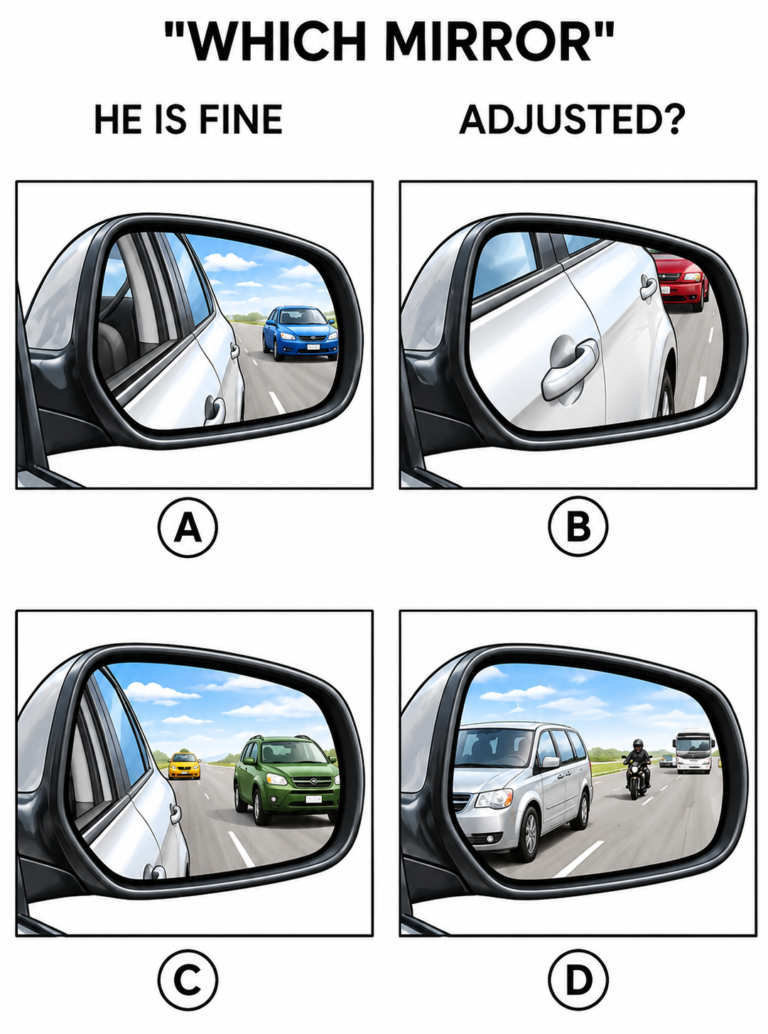
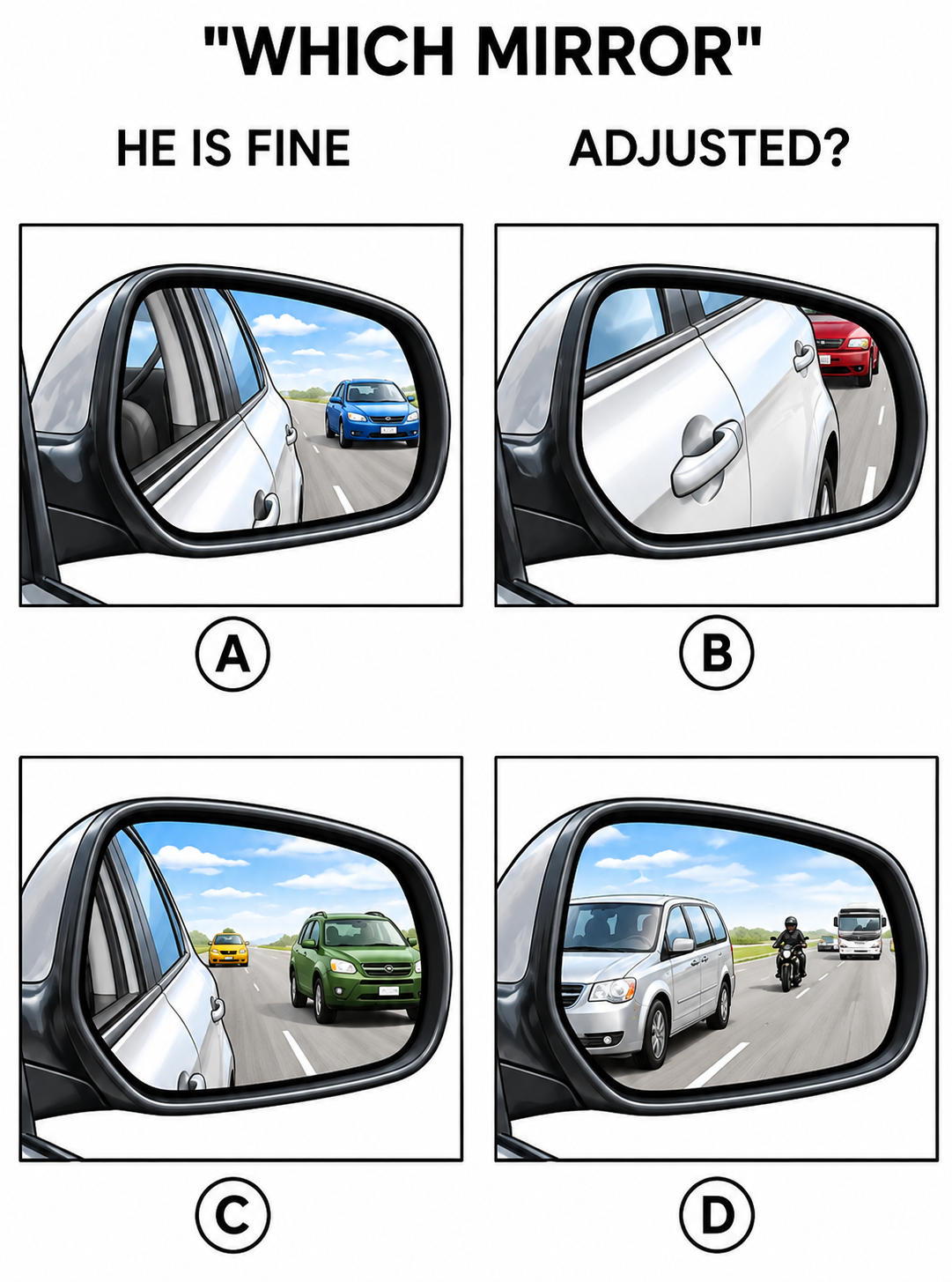
Take a look at the four mirror positions in the image above. Each one shows a different angle, but only one represents the outward-adjusted mirror approach.
Which one would you choose?
The intended answer is D, which shows the widest outward-facing view in this particular illustration.
But there is more to mirror adjustment than simply pointing your mirrors away from your car. Understanding blind spots and knowing how to position your mirrors can help you become a more aware and confident driver.
Let’s explore how it works.
Why Your Side Mirrors Matter More Than You Think
Your side mirrors are among the most important safety features in your vehicle.
They help you monitor traffic approaching from behind, observe vehicles traveling in neighboring lanes, and understand what is happening around your car.
Without properly adjusted mirrors, another vehicle, motorcycle, or cyclist may be difficult to see.
This becomes particularly important when:
- Changing lanes on a busy highway.
- Merging into traffic.
- Passing another vehicle.
- Driving in heavy traffic.
- Parking or reversing.
Even experienced drivers can overlook vehicles if their mirrors are not positioned correctly.
What Are Blind Spots?
A blind spot is an area around your vehicle that cannot be seen directly through your mirrors or windows from your normal driving position.
These areas are commonly found alongside the rear sections of a vehicle.
Imagine driving on a highway when another car approaches from behind. As it moves alongside your vehicle, it may temporarily disappear from your mirrors.
If you change lanes without checking, you could move directly into its path.
That is why understanding blind spots is essential for safe driving.
Why Mirror D Is the Preferred Answer in This Puzzle
In the illustration, option D shows a mirror positioned outward, focusing on the surrounding road rather than displaying the side of the driver’s own vehicle.
This resembles the outward-adjusted approach known as the Blindzone and Glare Elimination (BGE) method.
The idea is to use your inside rearview mirror to monitor traffic directly behind you while positioning your side mirrors to cover more of the neighboring lanes.
This can reduce the overlap between the mirrors and improve awareness of vehicles approaching from the sides.
However, there is an important detail: the best mirror position depends on your vehicle and driving position. No single picture can establish the correct adjustment for every driver.
The Difference Between Traditional and Outward-Adjusted Mirrors
There are two commonly discussed approaches to positioning side mirrors.
Traditional Mirror Adjustment
With the traditional method, drivers can see part of their own vehicle in the side mirrors.
This gives them a familiar reference point and helps them understand where their car is in relation to nearby objects.
However, the view of the vehicle itself takes up part of the mirror’s viewing area.
Outward-Adjusted Mirror Position
With the outward-adjusted approach, the side mirrors are positioned farther away from the vehicle.
This provides more coverage of the adjacent lanes and can reduce the overlap between the inside and outside mirrors.
The goal is to create a more continuous view of traffic moving around the vehicle.
Both approaches have limitations, so drivers should understand their vehicle’s visibility and always perform shoulder checks before changing lanes.
How to Adjust Your Car Mirrors Correctly
Here is a practical way to position your mirrors using the outward-adjusted method.
1. Adjust Your Driver’s Seat First
Before touching the mirrors, sit comfortably in your normal driving position.
Make sure you can reach the pedals and steering wheel without stretching.
Your seating position should be comfortable and consistent because changing it can affect what you see in your mirrors.
2. Adjust the Inside Rearview Mirror
Position the inside mirror so you can see as much of the rear window as possible.
This mirror should help you monitor vehicles approaching directly from behind.
Make sure your view is not blocked by passengers, luggage, or other objects.
3. Adjust the Driver-Side Mirror
For the outward-adjusted method, lean your head toward the driver’s side window.
Adjust the left mirror until you can just see the side of your vehicle.
When you return to your normal driving position, the visible portion of your car should disappear or become very small.
4. Adjust the Passenger-Side Mirror
Move your head toward the middle of the vehicle, approximately above the center console.
Adjust the passenger-side mirror until you can just see the right side of your vehicle.
Return to your normal driving position and check the view.
The goal is to see more of the roadway beside your vehicle.
5. Test Your Mirror Coverage
Before driving in traffic, check how vehicles appear in your mirrors.
A vehicle passing from behind should move from the inside rearview mirror toward the side mirror and then into your peripheral vision.
If there are large gaps in visibility, adjust the mirrors again.
Do Properly Adjusted Mirrors Eliminate Blind Spots?
No mirror arrangement guarantees that every blind spot will disappear.
Even with carefully adjusted mirrors, some areas may remain difficult to see.
For this reason, drivers should always:
- Check the inside rearview mirror.
- Check the appropriate side mirror.
- Look over their shoulder before changing lanes.
- Use turn signals before moving into another lane.
- Check for motorcycles, cyclists, and other road users.
- Avoid changing lanes when visibility is uncertain.
Blind-spot monitoring systems can provide additional warnings, but they should never replace careful observation.
Why Checking Your Mirrors at Night Is Important
Driving at night introduces additional visibility challenges.
Headlights from vehicles behind you can reflect directly into your mirrors and temporarily distract you.
The outward-adjusted BGE method is also designed to reduce some of this glare by changing the angle at which following headlights appear in the side mirrors.
However, every vehicle and mirror design is different.
If your vehicle has a day/night rearview mirror, learn how to use its anti-glare function.
Always keep your mirrors clean and make sure they are positioned correctly before starting a journey.
Common Mirror Adjustment Mistakes to Avoid
Even small mistakes can affect your visibility.
Here are some common ones:
1. Pointing Both Side Mirrors Too Far Inward
This can create unnecessary overlap and leave areas beside your vehicle less visible.
2. Adjusting Mirrors Before Your Seat
If you change your seating position afterward, the mirror angles may no longer work properly.
3. Depending Only on Mirrors
Mirrors cannot show every area around your vehicle. Shoulder checks remain important.
4. Ignoring the Passenger-Side Mirror
Drivers sometimes focus more on the left mirror and forget that the right side also needs proper adjustment.
5. Forgetting to Check Mirrors Before Driving
A mirror can be moved accidentally when cleaning the vehicle, carrying luggage, or allowing someone else to drive.
Frequently Asked Questions
Which side mirror position is best?
The best position is one that gives you a clear view of the adjacent lanes while minimizing blind spots. The outward-adjusted BGE method is one recognized approach.
Should I be able to see my own car in the side mirrors?
Depending on the adjustment method, you may see a small portion of your vehicle or none from your normal driving position. The priority is adequate visibility around the vehicle.
Does adjusting mirrors outward eliminate blind spots?
It can reduce certain blind areas, but it does not guarantee complete visibility. Always check over your shoulder before changing lanes.
How often should I adjust my car mirrors?
Check your mirrors before driving, especially if someone else has used your vehicle or your seat position has changed.
Is mirror adjustment important for new drivers?
Absolutely. Learning how to position and use mirrors is an essential part of developing safe driving habits.
Final Thoughts: Are Your Car Mirrors Adjusted Correctly?
The four-mirror puzzle is a useful reminder that something as simple as adjusting your mirrors can make a difference to your awareness on the road.
Option D represents the outward-facing approach shown in the illustration, but the correct adjustment must be tested from your actual driving position.
Remember that safe driving involves more than mirrors. Staying alert, checking your surroundings, using turn signals, and performing shoulder checks are all important.
Now it’s your turn!
Which mirror position did you choose: A, B, C, or D?
Were you surprised by the answer, or have you always adjusted your mirrors this way?
Share your answer in the comments below!
Stay alert, drive safely, and remember that a few seconds spent checking your mirrors can make a big difference.