Many People Mistake These Two Types of Garlic for Being the Same — But They’re Not
When browsing through the vegetable section at the market, we often see two familiar varieties of garlic: white garlic and purple garlic. At first glance, they may appear to differ only in color. However, the truth is that each type possesses its own unique characteristics in terms of flavor, aroma, and nutritional value.
1. Flavor Differences
White Garlic:
White garlic generally contains more moisture, which gives it a milder and less pungent flavor. Because of this gentle heat, it is a popular choice for eating raw. Many people enjoy pairing raw white garlic with dishes such as noodles, pho, boiled meat, or salad-style meals to enhance the overall taste and stimulate the appetite.
Purple Garlic:
In contrast, purple garlic has less moisture, resulting in a stronger aroma, a sharper heat, and a more intense flavor. This bold character holds up well under high heat, which is why purple garlic is often favored for roasting, searing, and long-simmered dishes like stews, marinades, and rich sauces — the flavor doesn’t fade the way milder garlic can over extended cooking times.
2. Appearance and Structure
The two varieties are easy to tell apart once you know what to look for:
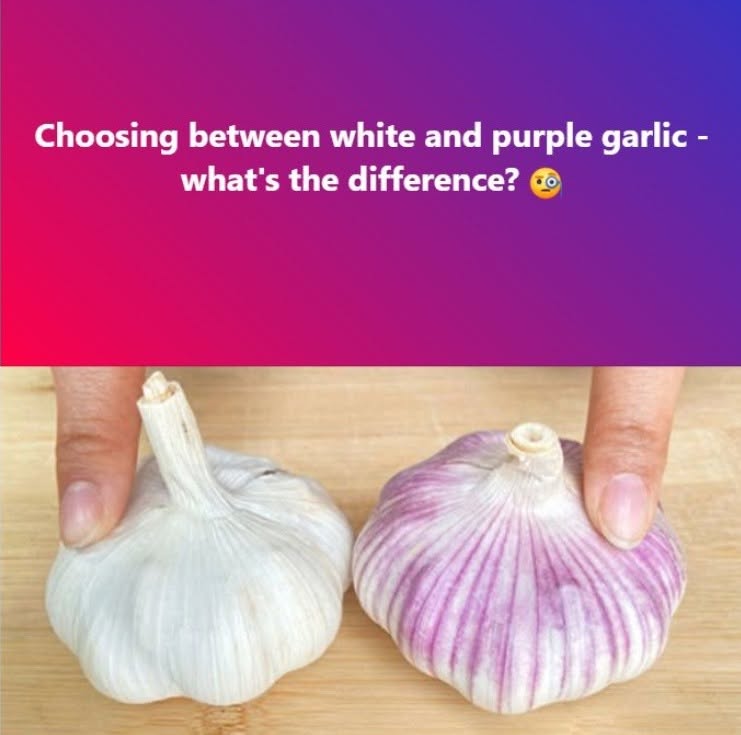
- White garlic has thin, papery, off-white skin and typically produces more cloves per bulb — often 10 to 20 smaller cloves.
- Purple garlic has skin marked with reddish-purple streaks or a fully purple hue, and usually produces fewer but noticeably larger cloves, sometimes as few as 4 to 8 per bulb.
This is actually tied to genetics: many purple varieties are “hardneck” garlic, which grows a rigid stalk through the center of the bulb, while most white garlic is “softneck,” the more common type found in grocery stores year-round.
3. Nutritional Value
Both types of garlic share the same core health benefits — they’re rich in allicin, the sulfur compound responsible for garlic’s signature smell and many of its well-known health properties, including support for heart health and immune function.
The key difference lies in anthocyanins, the natural pigments responsible for purple garlic’s color. These are the same antioxidant compounds found in blueberries, red cabbage, and red wine. Because of this, purple garlic tends to carry a higher antioxidant load than white garlic, in addition to its more concentrated sulfur compounds — which is part of why its flavor and aroma are so much stronger.
4. Which One Should You Choose?
There’s no single “better” garlic — it really comes down to how you’re using it:
- Choose white garlic for raw applications, light dressings, delicate soups, or everyday cooking where you want garlic flavor without it taking over the dish.
- Choose purple garlic for roasting, grilling, marinades, and dishes that cook low and slow, where its bold flavor has time to develop and shine.
Some home cooks even keep both on hand, using white garlic for daily meals and saving purple garlic for special dishes where a deeper, more complex flavor is the goal.
5. Storage Tips
To keep either type fresh longer:
- Store bulbs whole (unpeeled) in a cool, dry, well-ventilated spot — a mesh bag or open basket works well
- Avoid the refrigerator for whole bulbs, since cold, humid conditions can cause premature sprouting
- Once peeled or chopped, use garlic within a few days, or freeze it in small portions for longer storage
- White garlic generally has a longer overall shelf life, while purple garlic is best used within a few months of purchase for peak flavor
Frequently Asked Questions
Is purple garlic just white garlic that changed color?
No — while garlic can sometimes turn a bluish-purple during cooking due to a natural chemical reaction (especially in acidic or alkaline conditions), true purple garlic is a distinct variety with its coloring built into the skin and sometimes the cloves themselves.
Is purple garlic healthier than white garlic?
Both offer real health benefits, but purple garlic’s higher antioxidant content gives it a slight edge nutritionally. That said, the difference is unlikely to matter much unless garlic makes up a significant part of your diet.
Can I substitute one for the other in a recipe?
Yes, in most cases you can use them interchangeably in equal amounts — just keep in mind that purple garlic will bring a noticeably stronger flavor.
Why does purple garlic cost more at some markets?
It’s often less widely cultivated than standard white garlic and has a shorter growing season, which can make it pricier or harder to find outside farmers markets and specialty grocers.
So the next time you’re standing in the produce aisle deciding between the two, you’ll know it’s not just a matter of color — it’s a matter of flavor intensity, culinary purpose, and even nutrition.