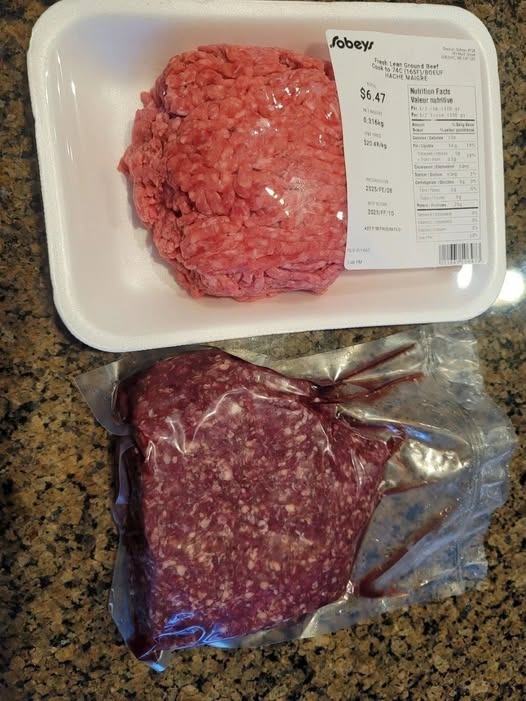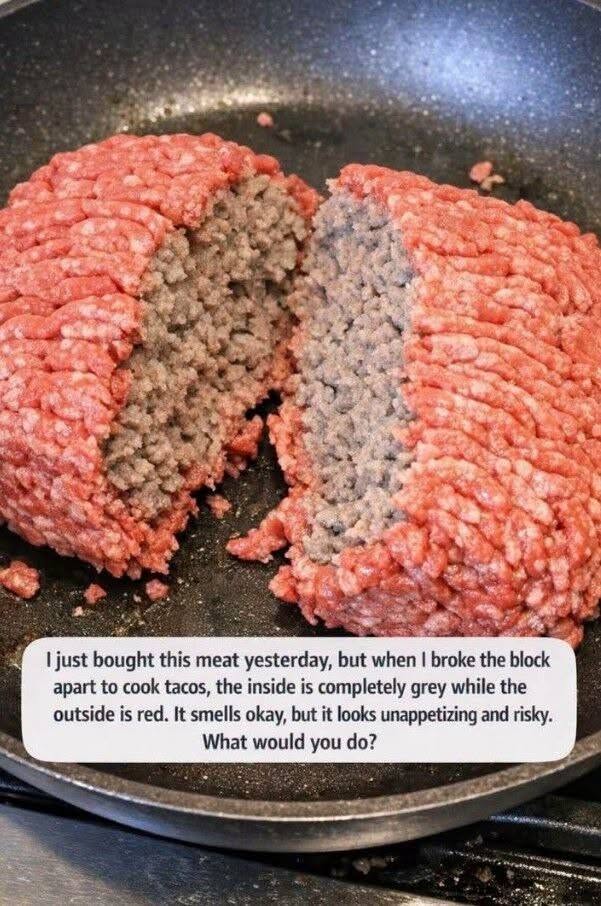
Few things are more unsettling than opening a package of ground beef only to discover that it doesn’t look the way you expected. Imagine purchasing a fresh package one day, storing it properly in the refrigerator, and then finding that while the outside is bright red, the inside is completely gray when you split it apart. Even if the meat smells normal, it’s natural to wonder whether it’s still safe to eat or if it belongs in the trash.
This situation happens more often than many people realize, and the surprising truth is that color alone isn’t always the best indicator of freshness. Ground beef naturally changes color depending on how much oxygen reaches the meat, how it was packaged, and how long it has been stored. Understanding why these changes happen can help you make informed decisions, reduce unnecessary food waste, and most importantly, keep your family safe.
In this guide, we’ll explain why ground beef sometimes turns gray inside, how to tell the difference between normal discoloration and spoilage, and what steps you should take before deciding whether to cook it or throw it away.
Why Is the Outside Red but the Inside Gray?
At first glance, the contrast between a bright red exterior and a gray center may seem alarming, but it’s often completely normal.
The answer lies in oxygen exposure.
Freshly cut beef contains a pigment called myoglobin, which changes color depending on the amount of oxygen it contacts.
When exposed to oxygen, myoglobin turns a bright cherry red.
When little or no oxygen is present, the meat appears gray or purplish.
Ground beef is tightly packed during processing. The outer layer is exposed to air, while the center remains compressed, receiving very little oxygen. As a result, it’s common for the outside to appear red while the middle stays gray until the meat is broken apart.
Packaging Plays a Big Role
Modern meat packaging is specifically designed to extend shelf life and preserve freshness.
Some packages are filled with oxygen-rich air to maintain the bright red appearance shoppers prefer. Others use vacuum or modified-atmosphere packaging to slow bacterial growth.
When the meat is compressed into a dense block, oxygen simply cannot reach every part of it. That means the center may naturally remain gray without indicating spoilage.
Once you separate the meat and expose the interior to fresh air, you’ll often notice it gradually turning red within 15 to 30 minutes.
Does Gray Meat Always Mean It’s Bad?
No.
Many people assume that gray meat automatically means it’s spoiled, but that’s one of the biggest misconceptions about food safety.
Color changes happen naturally throughout the storage process.
Gray meat can still be perfectly safe if:
It has been continuously refrigerated.
It’s within the use-by or sell-by date.
The package remains intact.
There are no unpleasant odors.
The texture feels normal.
On the other hand, meat that remains bright red isn’t necessarily fresh either. Some packaging methods are designed specifically to preserve the red color, even as the product ages.
This is why food safety experts recommend evaluating several factors—not just color.
Trust More Than Your Eyes
Instead of relying solely on appearance, check the meat using several simple observations.
1. Smell
Fresh ground beef has very little odor.
Spoiled meat often develops:
A sour smell
Rotten or sulfur-like odors
An ammonia-like scent
A strong unpleasant smell
If the meat smells bad, don’t taste it. Discard it immediately.
2. Texture
Fresh ground beef should feel:
Slightly moist
Firm
Easy to crumble
Spoiled meat often becomes:
Sticky
Slimy
Tacky
Excessively wet
A slippery texture is one of the clearest warning signs of bacterial growth.
3. Storage Time
Even fresh-looking meat has limits.
Generally:
Refrigerated ground beef should be cooked within 1–2 days after purchase.
Frozen ground beef remains safe for several months when properly wrapped.
If you’re unsure how long it’s been sitting in your refrigerator, it’s usually safer not to take the risk.
What If the Meat Smells Fine?
This is where many people become uncertain.
Next Page…