If the meat:
smells normal,
feels firm,
has been refrigerated continuously,
and is still within its recommended storage period,
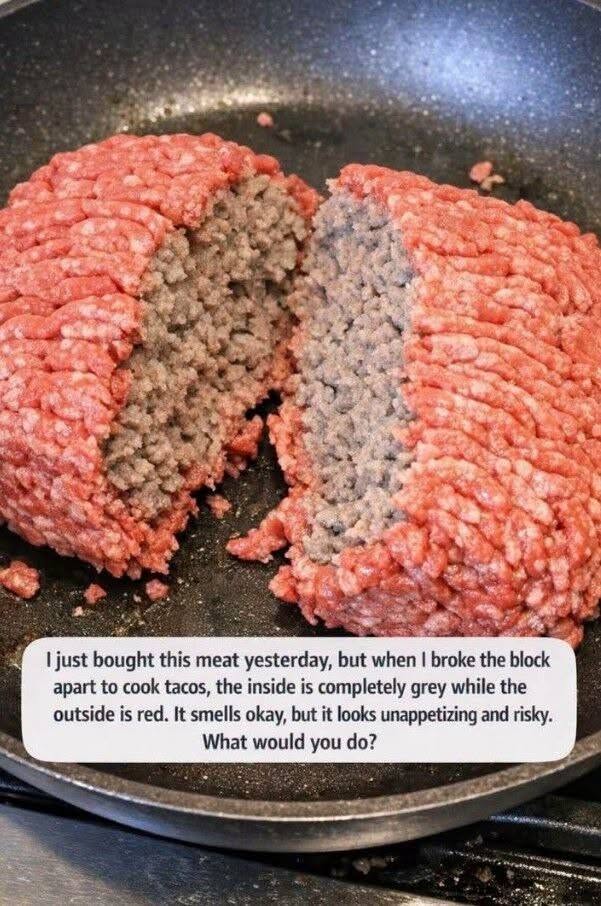
then the gray center is often simply the result of limited oxygen exposure rather than spoilage.
After breaking the meat apart, spread it out briefly. If much of the gray surface begins turning red as oxygen reaches it, that’s generally a reassuring sign.
When Should You Throw It Away?
There are situations where it’s better not to take chances.
Discard ground beef if you notice:
A sour or rotten smell
Slimy or sticky texture
Mold
Green, rainbow, or unusual discoloration
A swollen package
Torn packaging with leaking juices
It has remained unrefrigerated for more than two hours (or one hour in hot weather)
You’re unsure how long it has actually been stored
Food poisoning is never worth risking over a package of meat.
Common Myths About Ground Beef
Myth 1: Gray Meat Is Always Spoiled
False.
Lack of oxygen commonly causes harmless gray coloring.
Myth 2: Bright Red Meat Is Always Fresh
Also false.
Packaging gases can maintain a bright red appearance even as freshness declines.
Myth 3: Cooking Spoiled Meat Makes It Safe
No.
Cooking kills many bacteria but cannot always destroy toxins that some bacteria produce.
If the meat is spoiled, cooking will not necessarily make it safe to eat.
Proper Storage Makes a Difference
Keeping meat cold from the moment you buy it is one of the most effective ways to preserve freshness.
Helpful practices include:
Refrigerate immediately after shopping.
Keep your refrigerator at or below 40°F (4°C).
Store meat on the lowest shelf to prevent juices from dripping onto other foods.
Freeze meat if you won’t use it within two days.
Thaw frozen meat in the refrigerator rather than on the counter.
These simple habits reduce bacterial growth and help maintain quality.
Why Ground Beef Changes Faster Than Steak
Ground beef spoils more quickly than whole cuts because grinding dramatically increases the amount of surface area exposed to bacteria.
During grinding, bacteria that were originally only on the outside of the meat become mixed throughout the product.
That’s why ground beef should always be cooked thoroughly, unlike steaks that may safely be served at lower levels of doneness when properly handled.
Is It Safe to Cook?
If all signs point to freshness, cook the meat thoroughly until it reaches an internal temperature of 160°F (71°C).
Using a food thermometer is the most reliable way to ensure ground beef has reached a safe temperature.
The finished meat should no longer have any raw pink portions throughout.
What If You’re Still Unsure?
Sometimes everything seems normal except for one detail that leaves you uneasy.
When that happens, remember one simple rule:
If you have serious doubts about the safety of a food product, it’s better to discard it than risk foodborne illness.
Replacing a package of ground beef costs far less than dealing with severe food poisoning.
Final Thoughts
Finding gray ground beef inside a bright red package can certainly be surprising, but in many cases, it’s simply the result of how oxygen interacts with the meat rather than an indication that it has spoiled. The tightly packed center often receives very little oxygen, allowing it to retain a gray or purplish color until it’s exposed to air. This natural process is common and, by itself, isn’t usually a cause for concern.
However, color should never be your only guide when evaluating meat. A fresh smell, firm texture, proper refrigeration, and staying within the recommended storage time are all much more reliable indicators of safety. If the meat develops an unpleasant odor, becomes slimy, shows signs of mold, or has been improperly stored, it’s best to throw it away without hesitation.
Understanding these differences helps you make smarter decisions in the kitchen while avoiding unnecessary food waste. At the same time, it’s important to remember that when food safety is uncertain, caution should always come first. Trust your senses, follow safe food-handling practices, cook ground beef thoroughly, and don’t hesitate to discard anything that seems questionable. A little caution today can prevent a much bigger problem tomorrow.