How to Pickle Garlic at Home: The Easy Way to Keep It on Hand
Garlic is one of the most loved ingredients in kitchens all over the world. It adds depth to soups, sauces, roasts, and salads, and it contains antioxidant compounds and nutrients such as vitamin C that can be part of a healthy diet. It has been valued in traditional cooking for generations.
The problem is that fresh garlic doesn’t always last. After a few weeks, bulbs can sprout, dry out, or turn soft and moldy, especially if you buy in bulk. If you’ve ever thrown away half a bulb, you know how frustrating that is.
One of the easiest ways to make garlic last longer is to pickle it in a vinegar brine. The garlic keeps its signature flavor, but it becomes milder, softer, and easier to enjoy, and you’ll always have peeled cloves ready to use. The whole process takes about 10 minutes of hands-on time.
Why Pickle Garlic?
- Longer shelf life. The vinegar brine keeps garlic usable far longer than a loose peeled clove.
- Milder flavor. Pickling softens garlic’s sharp bite, making it gentler on the stomach for many people.
- Convenient. Peeled, ready-to-use cloves save time on busy nights.
- Versatile. Use them in salads, sandwiches, pasta, roasted vegetables, stir-fries, and cheese boards.
- Budget-friendly. Buying garlic in bulk and pickling it reduces waste.
Important Food Safety Note
Garlic is a low-acid food, and low-acid foods stored without oxygen can allow Clostridium botulinum to grow if they are not handled correctly. For that reason:
- Always store pickled garlic in the refrigerator. It is not shelf-stable.
- Keep the garlic fully submerged in the brine.
- Use clean utensils every time you take garlic out of the jar.
- Discard it if you see mold, a slimy texture, bubbling, off smells, or a bulging lid.
Do not leave the jar on the counter or in a cupboard. The refrigerator is part of the recipe.
Ingredients
- About 3 heads of garlic (roughly 1 cup of peeled cloves)
- 1 cup mild vinegar with 5% acidity (apple cider or distilled white vinegar)
- 1 cup water
- 1 tablespoon salt, plus 1 tablespoon for blanching water
- 1 tablespoon sugar
- ½ bay leaf
- A few chive stems or fresh dill (optional)
- 3 to 4 whole cloves (the spice)
- ½ teaspoon whole peppercorns
Equipment: a clean glass jar with a tight lid (about 1 pint), a medium saucepan, and a slotted spoon.
Instructions
1. Peel the garlic
Separate the heads into cloves and peel them. Soaking the cloves in warm water for a few minutes makes the skins easier to slip off. Trim off any hard root ends.
2. Blanch the garlic
Garlic is blanched before pickling to soften its harsh bite and help it stay pleasant in the brine.
- Fill a medium saucepan with water and 1 tablespoon of salt.
- Bring to a boil.
- Add the peeled cloves and cook for 3 to 4 minutes.
- Remove with a slotted spoon.
3. Make the brine
- In a saucepan, combine the vinegar, water, 1 tablespoon of salt, sugar, bay leaf, cloves, and peppercorns.
- Bring to a boil.
- Add the blanched garlic and simmer for 1 minute.
- Remove from the heat and let cool slightly.
4. Jar it
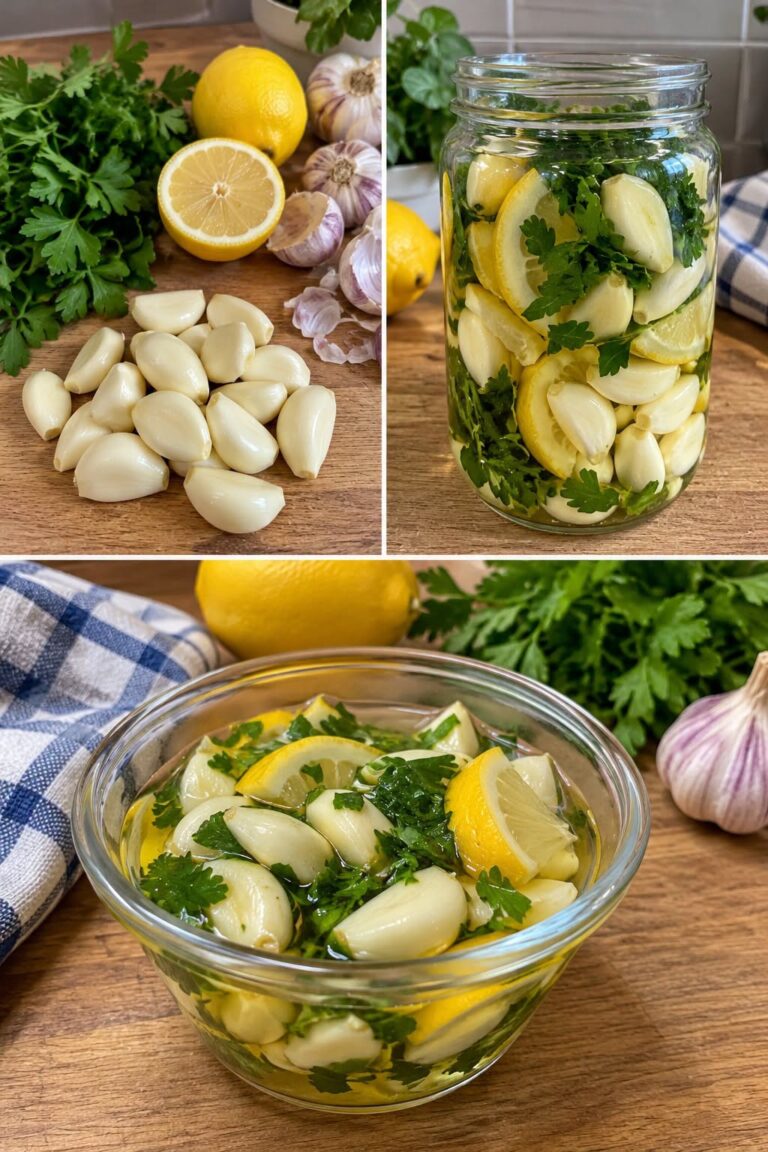
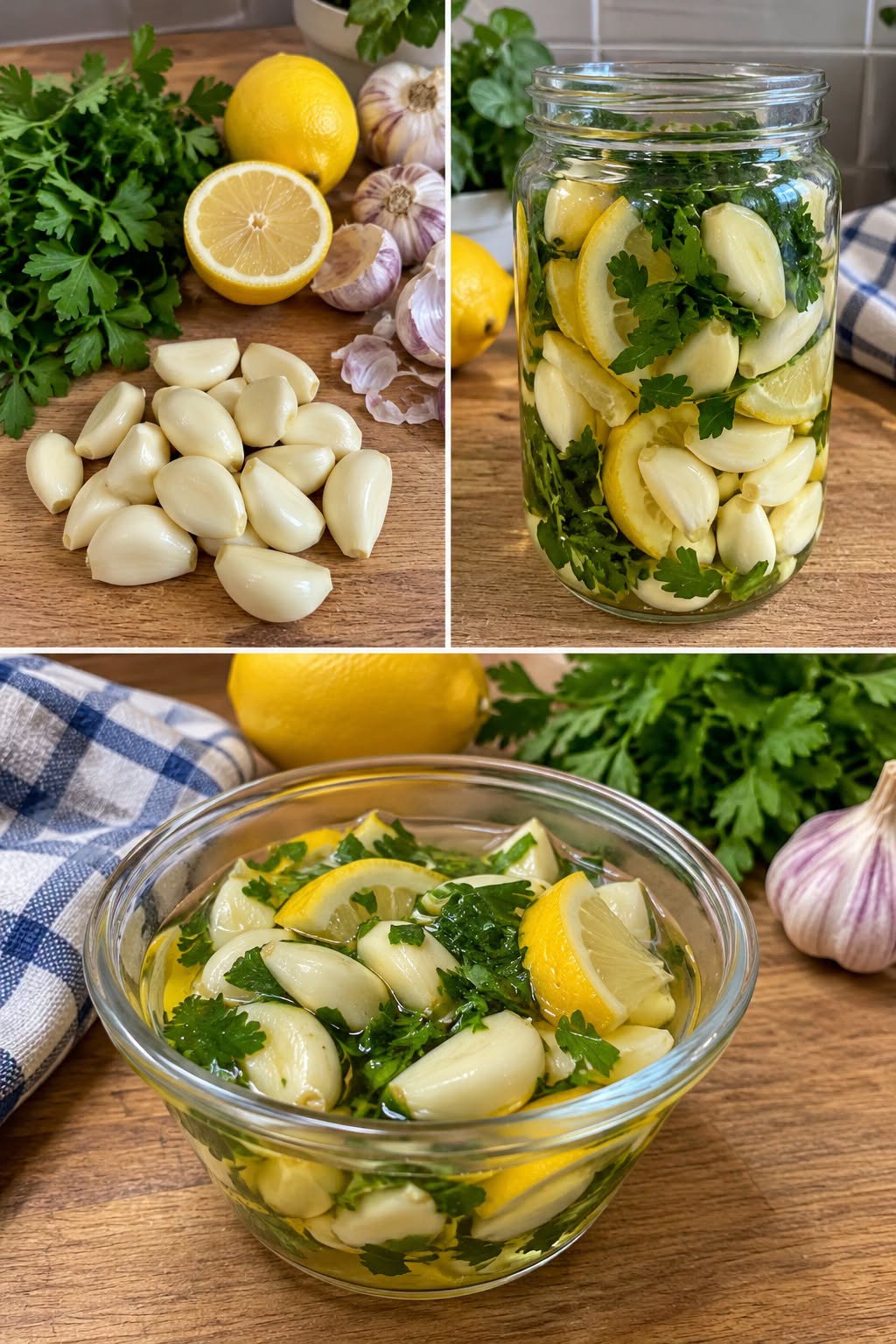
- Pack the garlic into a clean jar along with the spices and any chives or dill.
- Pour the hot brine over the garlic until the cloves are completely covered.
- Let the jar cool to room temperature with the lid off, then seal it.
5. Refrigerate and wait
Store the jar in the refrigerator. The garlic is ready to eat after 2 to 3 days, and the flavor keeps improving over the next couple of weeks.
Time and Yield
- Prep time: 10 minutes
- Cook time: 5 minutes
- Rest time: 2 to 3 days in the refrigerator
- Yield: about one pint jar
- Storage: best within 1 month in the refrigerator
Why Does Pickled Garlic Sometimes Turn Blue or Green?
Don’t panic if your garlic changes color. Garlic contains natural sulfur compounds and pigments that can react with acid, which can turn cloves blue, teal, or green in the jar. This color change is a harmless chemical reaction and doesn’t mean the garlic is spoiled. The flavor is unchanged. Mold, a bad smell, or a slimy texture are the real warning signs.
Tips for the Best Pickled Garlic
- Use fresh, firm garlic. Soft or sprouting cloves don’t pickle well.
- Don’t skip the blanching. It makes the finished garlic milder and more pleasant.
- Keep the garlic submerged. Garlic poking above the brine can spoil. Use a small fermentation weight or push cloves down with a clean spoon.
- Use vinegar with 5% acidity. Check the label, since weaker vinegars don’t protect as well.
- Skip rice vinegar and homemade vinegar for this recipe, since their acidity can be inconsistent.
- Use clean jars and utensils. This is one of the simplest ways to protect your batch.
- Label the jar with the date so you know how long it has been in the fridge.
How to Use Pickled Garlic
- Chop it into salads, potato salad, or coleslaw for tangy garlic flavor
- Add to sandwiches and wraps
- Stir into pasta, rice dishes, or stir-fries
- Roast with vegetables or chicken
- Serve on a charcuterie or cheese board with olives and pickles
- Blend into dressings, dips, and marinades
- Eat it straight, since it’s mild enough to enjoy as a snack
Don’t throw out the brine. The leftover garlic-flavored vinegar is great in salad dressings and marinades.
Frequently Asked Questions
Can I keep pickled garlic at room temperature?
No. Always store it in the refrigerator.
How long does pickled garlic last?
For best quality and safety, use it within about 1 month in the refrigerator. Stick to that window, especially because this brine is diluted with water.
Can I can this recipe so it lasts a year?
Not safely at home. Canning garlic is not recommended because it’s a low-acid vegetable and tested processing times haven’t been established for home canning.
Is pickled garlic healthier than fresh garlic?
Fresh and pickled garlic both offer nutrients and plant compounds, but pickling changes the flavor and texture, and some compounds may be altered. It’s a tasty way to eat garlic, not a replacement for a balanced diet.
Why does my garlic taste less sharp?
Blanching and pickling mellow the flavor. That’s the goal, since many people find it easier to eat.
Can I use red wine vinegar or balsamic?
You can, but they will change the color and flavor. Apple cider or white vinegar give the cleanest result.
Can I use pre-peeled garlic from the store?
Yes, as long as it’s fresh and firm. Rinse it before blanching.
Final Thoughts
Pickled garlic is a simple kitchen habit that cuts waste and saves time. In about 10 minutes, you can turn a few bulbs into a jar of tender, tangy cloves that dress up almost any meal. Just remember the golden rule: keep it in the refrigerator, keep it submerged, and enjoy it within a month.
Have you ever made pickled garlic at home? How do you like to eat it? Tell us in the comments!