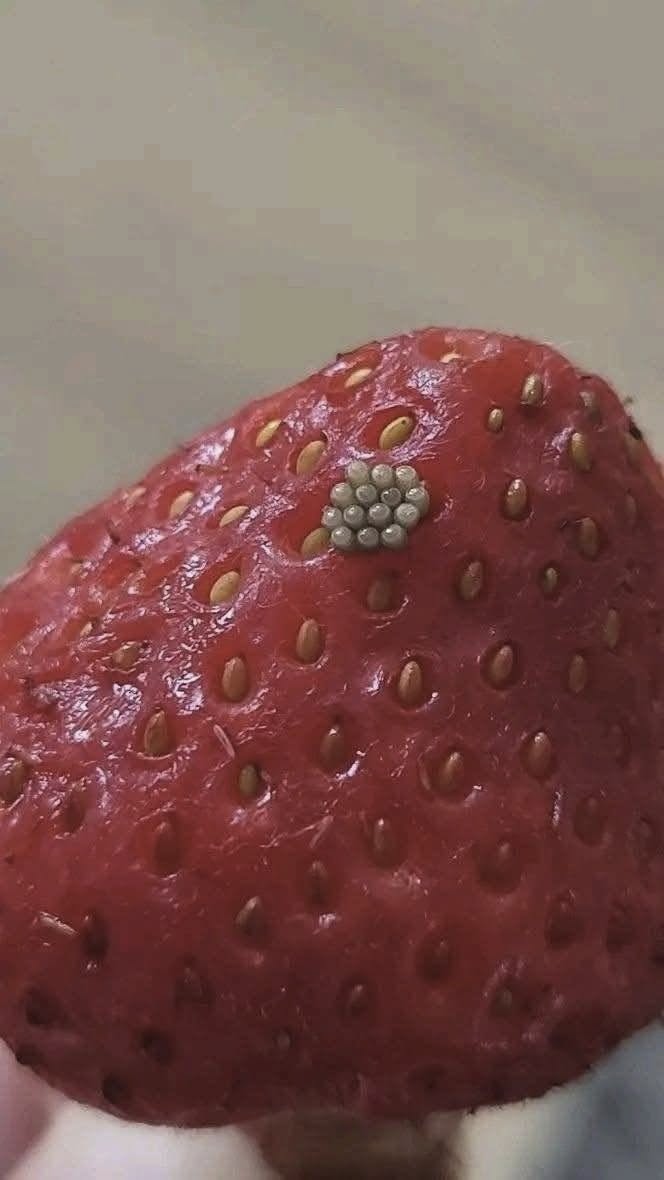
You’re washing strawberries, feeling virtuous for choosing fresh fruit—then you see it: tiny white worms wriggling out of the berries in your saltwater bath.
Your stomach drops. Your snack is ruined. And you wonder: “Did I just eat bugs? Are these safe? Do I throw everything away?”
First, take a breath.
This is far more common—and less dangerous—than you think.
Let’s break down what’s really happening, so you can decide calmly whether to rinse, toss, or enjoy your berries without fear.
 What Are Those Tiny White “Worms”?
They’re almost certainly fruit fly larvae—most often from the spotted wing drosophila, a tiny fly that lays eggs inside soft fruits like:
Strawberries
Raspberries
Blueberries
Blackberries
These flies pierce the skin of ripening fruit and deposit eggs. The larvae hatch and feed on the berry from the inside—completely hidden until you soak them.
 Key fact: Their presence does NOT mean the fruit is spoiled, rotten, or unsafe. It simply means it’s fresh, untreated produce from a natural growing environment.
 Why Does Salt Water Make Them Appear?
The saltwater soak doesn’t create the problem—it reveals it.
Salt irritates the larvae, causing them to squirm out of the fruit.
Without soaking, you’d likely never notice them—and may have eaten them unknowingly many times before.
This is why viral “cleaning hack” videos go viral—they make the invisible visible.
 Reality check: Nearly all non-organic berries contain trace insect matter. The FDA even allows a certain amount per serving—it’s considered unavoidable in agriculture.
 Are They Safe to Eat?
Yes—in most cases.
Fruit fly larvae are not parasitic—they don’t live in humans.
They pose no known health risk if accidentally consumed.
Your stomach acid would destroy them instantly.
That said, if the idea disgusts you (and it does for most people!), that’s valid too. Food safety includes psychological comfort.
 How to Clean Berries Properly (Without Wasting Food)
Step-by-Step Soak Method:
Fill a bowl with cold water + 1–2 tbsp salt (or vinegar).
Submerge berries for 5–10 minutes (no longer—berries absorb water and get mushy).
Gently swish to dislodge debris.
Rinse thoroughly under cool running water.
Pat dry with a towel or use a salad spinner.
 Pro tip: Don’t soak berries until you’re ready to eat them—moisture speeds up spoilage.
When to Toss vs. When to Keep
Situation
Action
A few tiny larvae, otherwise firm, fragrant berries
Rinse well and eat!
Berries are mushy, moldy, or smell sour
Toss—spoilage is the real risk
You’re immunocompromised or pregnant
Err on caution—rinse thoroughly or choose frozen
You’re deeply uncomfortable eating them
Trust your gut—food should bring joy, not anxiety
 Don’t waste food unnecessarily: One study found that over 50% of “bug-free” berries still had microscopic larvae—you just couldn’t see them!
 Prevention Tips for Future Batches
Buy organic or local—often picked riper and handled less
Eat berries within 2–3 days of purchase
Store dry in the fridge—line container with paper towels to absorb moisture
Freeze extras—freezing kills any hidden larvae and preserves nutrients
 Final Thoughts: Nature Isn’t Sterile—And That’s Okay
Finding larvae in berries isn’t a sign of poor quality—it’s a reminder that your food comes from soil, sun, and living ecosystems, not sterile labs. Even the cleanest farms can’t eliminate every insect.
So if you see those little wigglers, don’t panic. Rinse, dry, and enjoy your berries—or compost them if your peace of mind matters more.
Because at the end of the day, real food is imperfect, alive, and worth savoring—bugs and all.
 Have you found larvae in your berries? Share how you handled it below—we’re all learning together