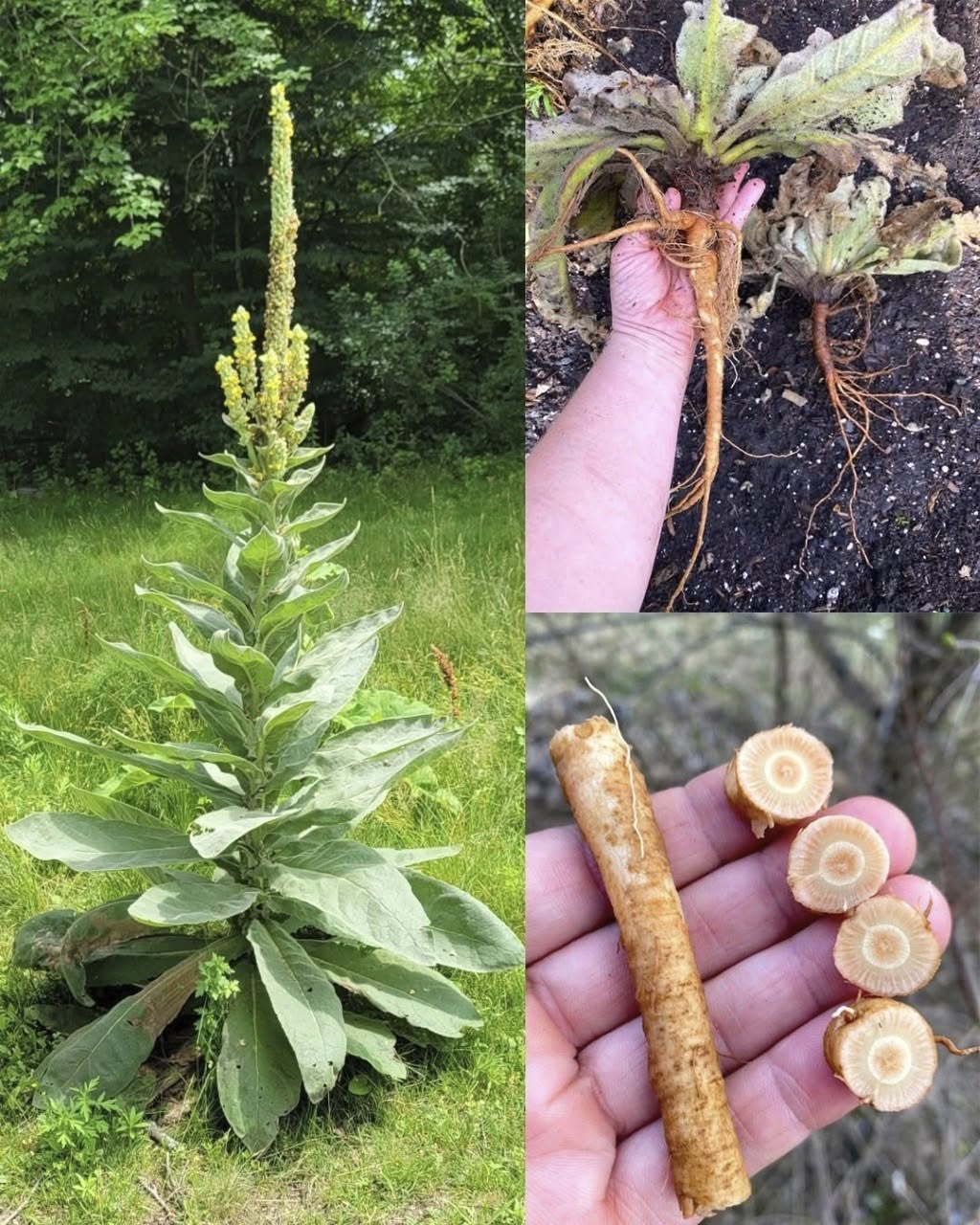
When most herbalists talk about mullein (Verbascum thapsus), they focus on its soft, fuzzy leaves and bright yellow flowers—long used for soothing coughs, calming irritated throats, and supporting lung health. But few people know that mullein root holds its own quiet power—a gentle yet effective remedy for urinary tract health, lymphatic support, and inflammation.
Often overlooked in favor of the more famous aerial parts, mullein root has been used for centuries in traditional folk medicine, especially by Appalachian healers and Native American tribes. And while modern research is still catching up, anecdotal evidence and historical use suggest it deserves a place in your herbal toolkit.
What Is Mullein Root?
Mullein is a biennial plant native to Europe and Asia but now widespread across North America. In its first year, it grows a low rosette of velvety leaves. In its second year, it sends up a tall flowering stalk—up to 6 feet high—before dying back.
The root, harvested in the fall of the first year or early spring of the second, is thin, fibrous, and pale yellow. Unlike the leaf and flower, it contains different active compounds—making it uniquely suited for specific health concerns.
Key Benefits & Traditional Uses
1. Supports Urinary Tract Health
Mullein root is best known as a gentle diuretic and urinary tonic. Traditionally, it’s used to:
Soothe irritation in the bladder and urethra
Reduce frequency and urgency in mild urinary discomfort
Support recovery from minor UTIs (often combined with uva ursi or marshmallow root)
How it works: It’s believed to have mild anti-inflammatory and antiseptic properties that calm mucous membranes in the urinary tract.
2. Lymphatic System Support
Herbalists use mullein root to stimulate lymph flow, especially when swollen glands or chronic congestion are present. It’s often included in formulas for:
Swollen tonsils
Recurrent ear infections (paired with mullein flower oil)
Post-illness stagnation
Note: Unlike harsh lymphatic stimulants, mullein root is considered gentle enough for long-term use.
3. Anti-Inflammatory & Mild Analgesic:
The root contains compounds like iridoid glycosides and saponins, which may help reduce inflammation—particularly in connective tissues and joints.
Some traditional healers even use it for sciatica or nerve pain, though scientific evidence is limited.
4. Bone & Joint Support (Folk Remedy)
In Appalachian folk medicine, mullein root tea was given to support bone healing after fractures or sprains—likely due to its anti-inflammatory effects and mineral content (calcium, magnesium).
How to Use Mullein Root
As a Tea (Decoction)
Because the root is woody, it requires a decoction (simmering), not just steeping:
Add 1–2 tsp dried root to 1 cup water.
Simmer gently for 15–20 minutes.
Strain and drink 1–3 cups daily.
Taste: Earthy, slightly sweet, mildly bitter.
Tincture
Typical dose: 1–2 mL (30–60 drops), 2–3 times daily in water.
Best made with 50–60% alcohol to extract active compounds.
Capsules
Less common, but available in some herbal blends.
Follow label dosing (usually 400–500 mg, 2–3x/day).
Safety: Generally well-tolerated. Avoid in pregnancy/nursing due to lack of safety data. Discontinue if digestive upset occurs.