Instructions
- Soak the fruit (recommended). Put the dried fruit, tea or orange juice, and the orange and lemon zest in a bowl. Stir, cover and leave overnight (or at least 1 hour) so the fruit soaks up the liquid and turns plump.
- Prepare the oven and tin. Preheat the oven to 150°C (300°F / 130°C fan). Grease an 8-inch (20 cm) deep round cake tin and line the base and sides with a double layer of baking parchment, letting it stand about 5 cm (2 inches) above the rim. This protects the cake during the long bake.
- Cream the butter and sugar. Beat the softened butter and dark brown sugar with an electric mixer for 3–5 minutes, until light and fluffy.
- Add the eggs. Beat in the eggs one at a time, mixing well after each. If the mixture starts to look curdled, add a tablespoon of the flour with the last egg.
- Mix the dry ingredients. In a separate bowl, sift together the flour, baking powder, cinnamon, nutmeg, allspice and cloves.
- Coat the fruit. Add the nuts (if using) to the soaked fruit along with any liquid left in the bowl. Toss with 2 tablespoons of the flour mixture — this stops the fruit sinking to the bottom.
- Make the batter. Add the rest of the flour mixture to the butter mixture and mix on low speed just until combined. Don’t overmix.
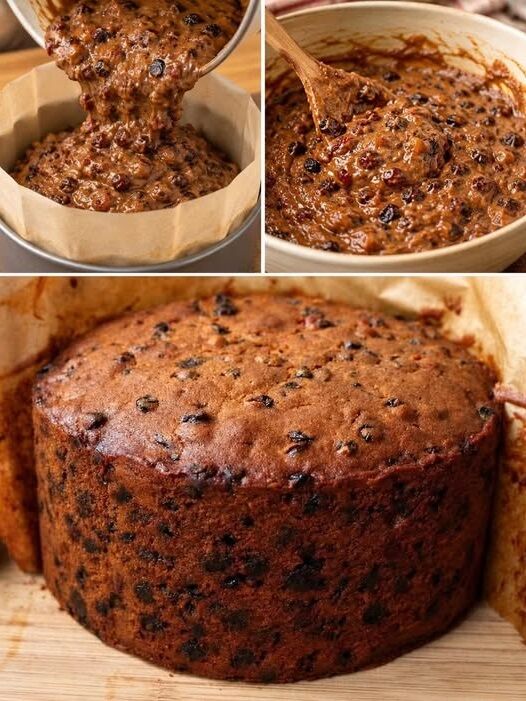
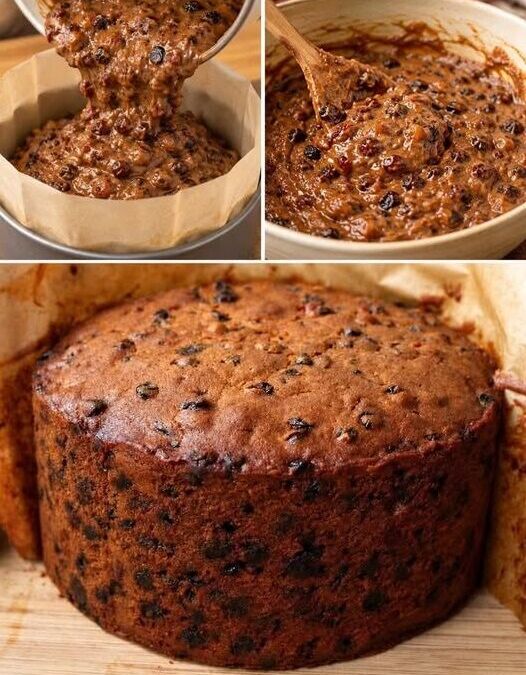
- Fold in the fruit. Gently fold the floured fruit into the batter until it’s evenly spread through. The batter will be very thick — that’s normal. If it feels very stiff, add 1–2 tablespoons of extra tea or orange juice.
- Fill the tin. Spoon the batter into the tin, level the top and make a slight dip in the centre so the cake bakes flat.
- Bake. Bake for 2 hours 30 minutes to 3 hours. If the top browns too fast, cover it loosely with foil.
- Check if it’s done. Insert a skewer into the centre — it should come out clean or with a few moist crumbs. The top should be deep golden brown and firm.
- Cool in the tin. Leave the cake to cool completely in the tin on a wire rack. Slow cooling keeps the moisture in.
- Wrap and store. Once fully cool, remove the cake from the tin. Wrap it in a double layer of parchment, then in foil, and store in an airtight container in a cool, dark place.
Nutritional Information
Per slice (approximate, based on 16 slices, with nuts):
- Calories: 420
- Protein: 5 g
- Carbohydrates: 65 g
- Fat: 16 g
- Fibre: 4 g
- Sodium: 180 mg
Values are estimates and change with the fruit and nuts you use.
Tips for a Perfectly Moist Fruit Cake
- Soak the fruit. This is the biggest secret to a moist alcohol-free fruit cake. Dry fruit pulls moisture out of the cake; soaked fruit adds it back.
- Don’t overbake. Start checking at 2 hours 30 minutes. A few moist crumbs on the skewer is perfect.
- Bake low and slow. A low oven cooks the dense batter evenly without burning the edges or top.
- Line the tin well. A double layer of parchment, extended above the rim, insulates the cake and stops the outside from drying out.
- Cool it in the tin. This traps steam and keeps the cake soft.
- Use room-temperature butter and eggs. They mix together smoothly and give a better texture.
- Weigh your ingredients. For fruit cake, a kitchen scale gives much more reliable results than cups.
How to “feed” an alcohol-free Christmas cake
Traditionally, Christmas cakes are “fed” every week with alcohol. For this alcohol-free version, you can brush the top with 1–2 tablespoons of warm orange juice or a simple orange syrup (equal parts orange juice and sugar, simmered for 2 minutes and cooled). Pierce the cake with a skewer, spoon the juice over and wrap it again.
Because juice doesn’t preserve the cake the way alcohol does, feed it once or twice only, in the last few days before serving — and keep it in the fridge after feeding.
Variations and Substitutions
- Dried fruit: use any mix you like — dates, figs, dried cranberries, dried blueberries or more raisins. Skip the glacé cherries if you don’t like them. Keep the total at 750 g.
- Soaking liquid: strong black tea, orange juice, apple juice or cranberry juice all work. Tea gives a deeper, classic flavour; juice makes it fruitier.
- Nut-free: leave out the almonds and walnuts. The cake will still be rich and moist.
- Spices: add a pinch of ground ginger or cardamom, or use 1½ tsp mixed spice instead of the individual spices.
- Darker, richer cake: add 1 tablespoon of black treacle or molasses with the eggs.
- Gluten-free: use a good gluten-free plain flour blend and add 1–2 tablespoons of extra juice, as gluten-free flour absorbs more liquid.
- Smaller cake: halve all the ingredients, use a 6-inch (15 cm) tin and start checking after about 1 hour 45 minutes.
How to Decorate Your Christmas Cake
- Classic: brush the top with warm apricot jam, cover with marzipan, then roll out white fondant or spread royal icing in snowy peaks.
- Simple: brush with warm apricot jam and arrange whole nuts and glacé cherries on top for a shiny, jewelled finish.
- Quick: a dusting of icing sugar and a sprig of holly or rosemary.
If you’re using marzipan and icing, add them a few days before serving.
Storage, Freezing and Serving
- Cool completely first. Wrapping a warm cake causes condensation, sogginess and mould.
- Wrap well. Double parchment, then double foil, then an airtight tin or container.
- Room temperature: because this cake contains no alcohol, it keeps for about 1–2 weeks in a cool, dark place. Check it regularly.
- Fridge: keep it in the fridge if your kitchen is warm or after feeding with juice. Bring slices to room temperature before serving.
- Freezer: wrap the cooled cake (parchment, foil, then a freezer bag) and freeze for up to 3 months. Thaw overnight in the fridge, then bring to room temperature.
- Warming a slice: microwave on medium for 10–20 seconds, or warm in a 100°C (200°F) oven for 5–10 minutes. Lovely with custard or cream.
Frequently Asked Questions
Can I make Christmas cake without alcohol?
Yes. This recipe is completely alcohol-free. Soaking the fruit in strong tea or orange juice keeps the cake moist and full of flavour.
How far ahead can I make an alcohol-free Christmas cake?
About 1–2 weeks ahead if stored well wrapped in a cool, dark place. For longer, freeze it for up to 3 months and thaw a day before serving.
Why is my fruit cake dry?
The most common reasons are overbaking, an oven that runs hot, not soaking the fruit, or not lining the tin well. Start checking at 2 hours 30 minutes and use an oven thermometer if you can.
How do I stop the fruit sinking to the bottom?
Toss the fruit in 2 tablespoons of the flour mixture before folding it in. A thick batter, like this one, also helps hold the fruit in place.
My cake is browning too quickly on top. What should I do?
Cover it loosely with a sheet of foil for the rest of the bake. This shields the top while the centre finishes cooking.
Can I use a fan oven?
Yes. Set it to 130°C and start checking a little earlier, as fan ovens often bake faster.
Why did my Christmas cake crack on top?
Usually the oven was too hot, so the outside set before the inside rose. Make a slight dip in the centre of the batter and bake low and slow.
Can I make this cake in a loaf tin?
Yes. Divide the batter between two 2 lb (900 g) loaf tins and start checking after about 1 hour 30 minutes.
Final Thoughts
This easy moist Christmas cake proves you don’t need alcohol or complicated steps to bake a rich, festive fruit cake. Soak the fruit, bake it low and slow, and let it cool in the tin — that’s really all it takes.
Whether you decorate it with marzipan and icing or simply top it with nuts and cherries, it’s a cake the whole family can enjoy — and one you’ll want to bake every December.