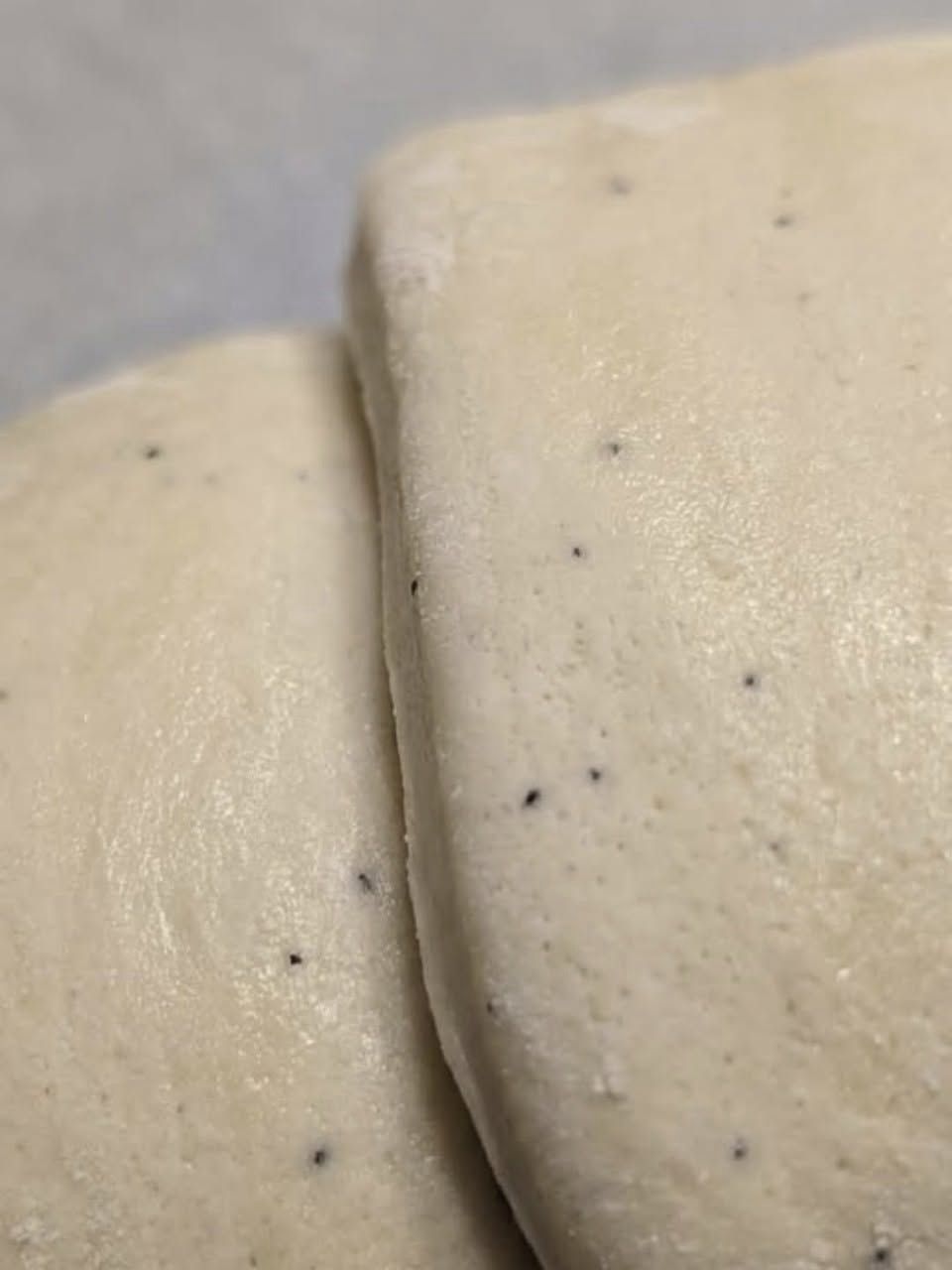
You’ve just pulled out a sheet of puff pastry—ready to make golden turnovers, flaky palmiers, or savory pinwheels—when you spot them: tiny black or dark gray specks dotting the dough.
Your heart skips. Is it mold? Is it spoiled?
Take a breath. In most cases, those specks are completely harmless—and not a sign your pastry has gone bad. Here’s what they really are, when to be concerned, and how to tell the difference.
✅ Most Common Cause: Burnt Flour or Dough Residue
The #1 reason for black specks in store-bought puff pastry?
Tiny bits of baked-on dough or flour that got toasted during manufacturing.
During industrial production, layers of dough are rolled, folded, and chilled repeatedly.
Small fragments can get trapped between folds or stick to rollers.
When exposed to heat (even ambient warmth in storage), these bits darken or char slightly, creating harmless black specks.
🔍 What it looks like: Flat, dry, embedded specks—never fuzzy, raised, or spreading.
🌾 Other Possible Causes
- Vanilla Bean Seeds (If Sweet Pastry):
Some premium or artisanal puff pastries (especially dessert varieties) contain real vanilla bean, which leaves behind tiny black seeds. These are edible and intentional.
- Charred Sugar or Caramelized Bits
In sweet puff pastry (like all-butter or Danish-style), sugar can caramelize slightly during handling or freezing, forming dark micro-specks.
- Natural Impurities in Flour
Whole wheat or stone-ground flours may contain tiny bran particles or husk fragments that appear dark—especially after freezing.
⚠️ When to Worry: Signs of Actual Spoilage
While most black specks are benign, true spoilage shows other clear signs:
Harmless Specks
Mold or Spoilage
Flat, dry, uniform
Fuzzy, raised, or web-like
Only on surface or between layers
Spreading over time
No odor
Sour, yeasty, or “off” smell
Appear immediately upon opening
Develop after days in fridge
🚫 Discard if: You see green, blue, white, or fuzzy black patches—especially with an odd smell.
🧊 How to Store Puff Pastry Safely
Frozen: Keep sealed in original packaging; use by “best by” date.
Thawed: Use within 2–3 days in the fridge—never refreeze.
Always check: Before using, inspect for odor, texture changes, or spreading discoloration.
💡 Pro Tips
Blot with a damp paper towel: If specks bother you visually, gently wipe the surface (don’t soak the dough).
Bake as usual: Harmless specks won’t affect flavor or safety—and often disappear during baking.
When in doubt, toss it: If you’re unsure, it’s better to be safe than sorry.
The Bottom Line
Those mysterious black dots are almost always harmless manufacturing artifacts—not mold, not contamination, just the reality of mass-produced dough.
So go ahead: roll out that pastry, fill it, fold it, and bake it into something beautiful. Those specks won’t hurt a thing—except maybe your perfectionism!
“Flakiness isn’t about flawlessness—it’s about layers of care, even with a few specks along the way.”
Have you seen black specks in your puff pastry? Did you bake it anyway? Share your experience below—we’re all learning to bake with confidence! 🥐✨