Instructions
- Prepare the oven and pan. Preheat the oven to 180°C (350°F / 160°C fan). Generously grease a 9-inch (23 cm) round pan or an 8 x 8-inch (20 x 20 cm) baking dish with butter and dust with flour, or line it with baking paper. If you use a springform pan, wrap the outside with foil, as the batter is very runny.
- Blend the wet ingredients. Put the eggs, condensed milk, milk, sugar, melted butter and vanilla sugar in a blender. Blend for 1 minute until smooth.
- Add the dry ingredients. Add the coconut, flour, baking powder and salt. Blend for 30–60 seconds more, just until everything is combined. The batter will be thin and liquid — that’s exactly right.
- Pour and bake. Pour the batter into the prepared pan. Place it on the middle rack and bake for 45–55 minutes, until the top is deep golden and the cake is set at the edges but still slightly wobbly in the centre when you gently shake the pan.
- Cool. Let the cake cool completely in the pan at room temperature, about 1 hour. It will firm up as it cools.
- Chill. Cover and chill in the fridge for at least 2 hours, or overnight. This sets the creamy layer so you get clean slices.
- Serve. Run a knife around the edge and cut into slices or squares straight from the pan. Top with toasted coconut flakes or a dusting of powdered sugar if you like.
Tips for the Creamiest Blender Cake
- Don’t overbake. The centre should still wobble slightly when it comes out of the oven. If it’s completely firm, the creamy layer will turn more like a regular cake.
- Be patient and chill it. Warm, the custard layer is very soft. After chilling it becomes silky and sliceable.
- Use whole milk. Low-fat milk makes the custard layer thinner and less creamy.
- Use unsweetened coconut. Sweetened shredded coconut makes the cake too sweet. If that’s all you have, reduce the sugar to 50 g.
- Grease the pan well. The bottom layer is soft and creamy, so it can stick. Baking paper makes serving easier.
- Don’t over-blend after adding the flour. Just until combined, to keep the top layer soft.
- Oven check: if the top browns too quickly, cover it loosely with foil for the last 10–15 minutes.
Variations
- Coconut milk version: replace the milk with 400 ml canned coconut milk plus 80 ml water for an even richer coconut flavour.
- Corn version (bolo de milho cremoso): replace the coconut with 1 can (about 200 g drained) sweet corn — a classic Brazilian favourite.
- Chocolate swirl: after pouring, drizzle 50 g melted dark chocolate over the batter and swirl with a knife.
- Lemon or orange: add the zest of 1 lemon or orange to the blender.
- Cinnamon: sprinkle cinnamon sugar over the top before baking.
- Gluten-free: use cornstarch instead of flour (the same weight). The custard layer will be even silkier.
How to Store
- Fridge: this cake must be kept in the fridge because of the eggs and milk. Cover it and store for up to 3–4 days.
- Freezer: freeze slices, well wrapped, for up to 1 month. Thaw overnight in the fridge. The texture is best fresh, but it freezes reasonably well.
- Don’t leave it out: like any custard dessert, don’t keep it at room temperature for more than 2 hours.
How to Serve
Serve it cold, straight from the fridge, with a cup of coffee or tea. For a dessert plate, add fresh mango, pineapple or berries, a spoon of whipped cream, or a drizzle of caramel or dulce de leche.
Frequently Asked Questions
What is a creamy blender cake?
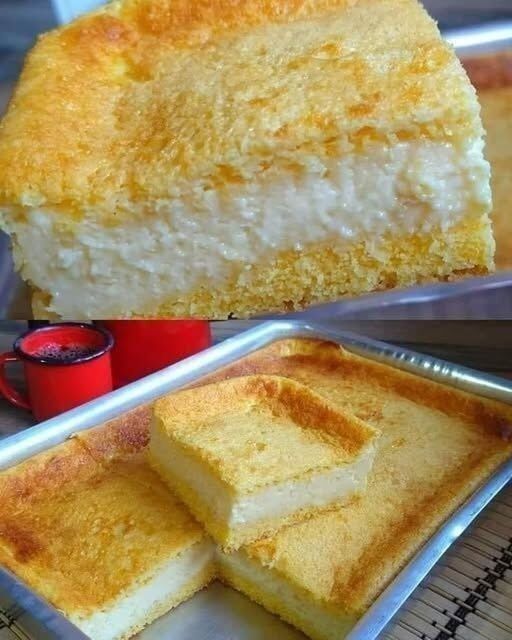
It’s a cake made by blending all the ingredients into a thin batter and baking it. Because the batter has little flour and lots of milk and eggs, it separates while baking into a creamy custard layer and a soft cake layer on top. It’s inspired by the Brazilian bolo cremoso.
Why didn’t my cake form a creamy layer?
It was probably overbaked, or the batter had too much flour. Take it out while the centre still wobbles slightly and chill it for at least 2 hours.
Why is my blender cake runny in the middle?
It needed a few more minutes in the oven, or it wasn’t chilled long enough. The centre should be set at the edges and just slightly wobbly, then it firms up in the fridge.
Can I make it without condensed milk?
Condensed milk gives the creamy texture and sweetness. Without it, use 2½ cups (600 ml) milk and increase the sugar to 250 g, but the custard layer will be less rich.
Can I make this cake without a blender?
Yes. Whisk the wet ingredients well in a large bowl, then whisk in the dry ingredients until smooth. A hand blender (stick blender) also works.
Should I serve it warm or cold?
Cold is best. The creamy layer sets in the fridge and the flavours come together. Warm, it’s delicious but very soft.
Can I double the recipe?
Yes. Double everything and bake in a 9 x 13-inch (23 x 33 cm) dish for about 55–65 minutes.
Is this the same as a magic custard cake?
They’re similar. A magic custard cake uses whipped egg whites and makes three layers. This blender version is simpler — no whipping — and makes two creamy, coconut-rich layers.
Final Thoughts
This creamy blender cake is proof that a great dessert doesn’t need to be complicated. Blend, pour, bake and chill — and you’ll get a silky coconut custard and a soft golden top every time.
Keep a can of condensed milk and a bag of coconut in your pantry, and you’ll always be 10 minutes away from a dessert everyone will ask you to make again.