For the cake:
- 1 cup (226 g) unsalted butter, softened
- 1 cup (200 g) dark brown sugar, packed
- 4 large eggs, at room temperature
- ½ cup (120 ml) molasses or black treacle
- Zest of 1 orange
- Zest of 1 lemon
- 2 cups (240 g) all-purpose (plain) flour, plus 1 tbsp for the fruit
- 1 tsp baking powder
- ½ tsp ground cinnamon
- ¼ tsp ground nutmeg
- ⅛ tsp ground allspice
- 1 pinch ground cloves
- ½ cup (60 g) chopped blanched almonds or pecans (optional)
For the glaze:
- 2 tbsp apricot jam or orange marmalade
Instructions
- Soak the fruit. In a large bowl, mix the dried fruit, glacé cherries and candied peel. Pour over the tea (or juice) and stir until everything is coated. Cover and leave for 8–24 hours, stirring once or twice. If your kitchen is warm, keep the bowl in the fridge. Short on time? Use hot tea and soak for at least 4 hours.
- Prepare the oven and tin. Preheat the oven to 150°C (300°F / 130°C fan). Grease an 8-inch (20 cm) deep round tin and line the base and sides with a double layer of parchment, letting it stand 5 cm (2 inches) above the rim. This stops the cake over-browning and drying out.
- Cream the butter and sugar. Beat the butter and dark brown sugar with an electric mixer for 3–5 minutes, until light, fluffy and paler in colour.
- Add the eggs. Beat in the eggs one at a time, mixing well after each. If the mixture starts to curdle, add a tablespoon of the flour with the last egg.
- Add the molasses and zest. Stir the molasses (or treacle), orange zest and lemon zest into the butter mixture.
- Mix the dry ingredients. In another bowl, whisk the flour, baking powder, cinnamon, nutmeg, allspice and cloves.
- Combine. Add the dry ingredients to the butter mixture and mix on low speed just until combined. Don’t overmix, or the cake can turn tough.
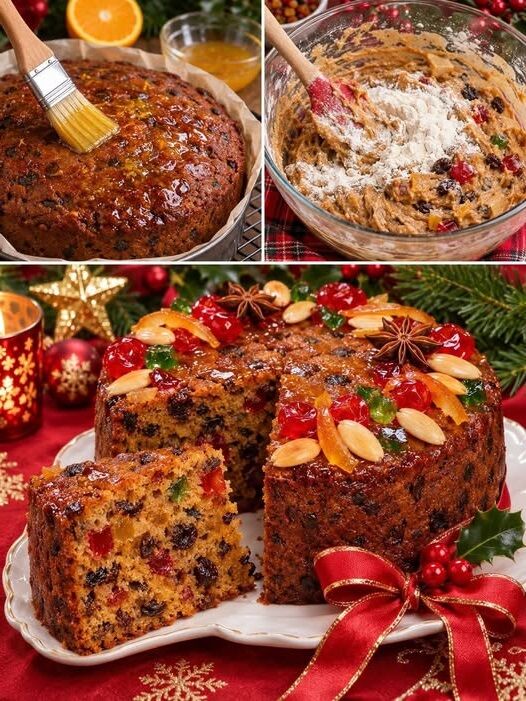
- Fold in the fruit and nuts. Drain any liquid left in the fruit bowl, then toss the fruit with 1 tablespoon of flour. Gently fold the fruit and the nuts (if using) into the batter until evenly spread.
- Fill the tin. Spoon the batter into the tin, smooth the top and make a slight hollow in the centre so the cake bakes flat.
- Bake low and slow. Bake for about 2 hours 15 minutes, starting to check at 1 hour 45 minutes. It’s ready when a skewer in the centre comes out clean and the top springs back lightly. If the top browns too quickly, cover it loosely with foil.
- Cool. Let the cake cool in the tin on a wire rack for at least 30 minutes before lifting it out.
- Glaze. While the cake is still warm, melt the apricot jam or marmalade in a small pan or the microwave (strain it for a smooth finish). Brush it over the top and sides.
- Cool completely and wrap. Let the cake cool fully, then wrap it in a double layer of parchment and foil, or store it in an airtight tin.
Nutritional Information
Per slice (approximate, based on 16 slices):
- Calories: 450 kcal
- Protein: 5 g
- Carbohydrates: 70 g
- Fat: 18 g
- Fibre: 4 g
- Sodium: 150 mg
Values are estimates and depend on the fruit and nuts you use.
Tips for the Most Moist Fruit Cake
- Buy good dried fruit. Soft, plump fruit makes a big difference. Hard, old fruit stays chewy even after soaking.
- Make sure the fruit is covered. Stir it a few times while soaking so every piece absorbs liquid.
- Don’t skip the flour coating. A light dusting of flour keeps the fruit from sinking to the bottom.
- Take your time creaming. Beating the butter and sugar until pale adds air and gives a tender crumb.
- Know your oven. If it has hot spots, turn the cake halfway through baking. An oven thermometer helps a lot.
- Test two ways. A clean skewer and a gentle spring-back when you press the top.
- Underbake rather than overbake. Overbaking is the number-one reason fruit cake turns dry.
Variations
- Spices: add a pinch of cardamom or ground ginger for extra warmth, or use 1 tsp mixed spice.
- Soaking liquid: strong black tea gives a deep, classic flavour; orange juice makes it brighter and fruitier; apple juice is milder and sweeter.
- Fruit mix: swap in dates, dried cranberries or prunes. Keep the total fruit weight about the same.
- Glaze: instead of jam, brush with a simple orange syrup (equal parts orange juice and sugar, simmered for 2 minutes).
- Marzipan and icing: for a celebration cake, brush with warm apricot jam, cover with marzipan, then top with fondant or royal icing.
- Nut-free: leave out the almonds or pecans.
- Gluten-free: use a gluten-free plain flour blend and add 1–2 tablespoons of extra juice if the batter feels very stiff.
Storage, Freezing and Serving
- Cool completely before wrapping. Wrapping a warm cake traps steam and can cause mould.
- Wrap well: double parchment, then foil, or an airtight container.
- Room temperature: because this cake contains no alcohol, it keeps for about 1–2 weeks in a cool, dark place. The flavour gets better after the first 2–3 days.
- Fridge: if your kitchen is warm, keep it in the fridge (well wrapped) and bring slices to room temperature before serving.
- Freezer: wrap in plastic wrap, then foil, and freeze for up to 3 months. Thaw overnight at room temperature, still wrapped.
- Serving: fruit cake is best at room temperature. To warm a slice, microwave for 10–15 seconds. Serve thinly sliced with clotted cream, vanilla ice cream, or a slice of sharp cheddar — a classic pairing in the north of England.
Frequently Asked Questions
Can I make fruit cake without alcohol?
Yes — this recipe is completely alcohol-free. Soaking the fruit in strong black tea, orange juice or apple juice keeps the cake moist and full of flavour.
How far in advance can I make this fruit cake?
Up to 1–2 weeks ahead if you store it well wrapped in a cool, dark place. For longer, freeze it for up to 3 months.
Why did my fruit sink to the bottom?
Usually the fruit wasn’t coated in flour, it was too wet, or the batter was overmixed or too thin. Drain the soaked fruit, toss it in flour, and mix the batter just until combined.
Why is my fruit cake dry?
The most common causes are overbaking, an oven running too hot, or fruit that wasn’t soaked. Check from 1 hour 45 minutes and bake at a low temperature.
Can I use molasses instead of black treacle?
Yes. They’re very similar. Molasses is easier to find in the US; black treacle is common in the UK. Both give the cake its dark colour and rich flavour.
What’s the difference between this and a Christmas cake?
They’re closely related. This classic fruit cake is darker thanks to molasses and has an apricot glaze, so it’s ready to enjoy without icing. A traditional Christmas cake is usually covered in marzipan and white icing.
Can I bake this in a loaf tin?
Yes. Divide the batter between two 2 lb (900 g) loaf tins and start checking after about 1 hour 15 minutes.
Is fruit cake a good homemade gift?
Very. Glaze it, wrap it in parchment, tie it with ribbon and add a label with the date and “keep in a cool, dark place”.
Final Thoughts
This classic moist fruit cake brings back everything that made fruit cake a holiday tradition: rich, dark flavour, plump fruit in every slice and a tender crumb — all without a drop of alcohol.
Soak the fruit, bake it low and slow, and finish it with a shiny glaze. Whether you serve it at a holiday gathering or wrap it up as a gift, it’s a recipe you’ll come back to every year.