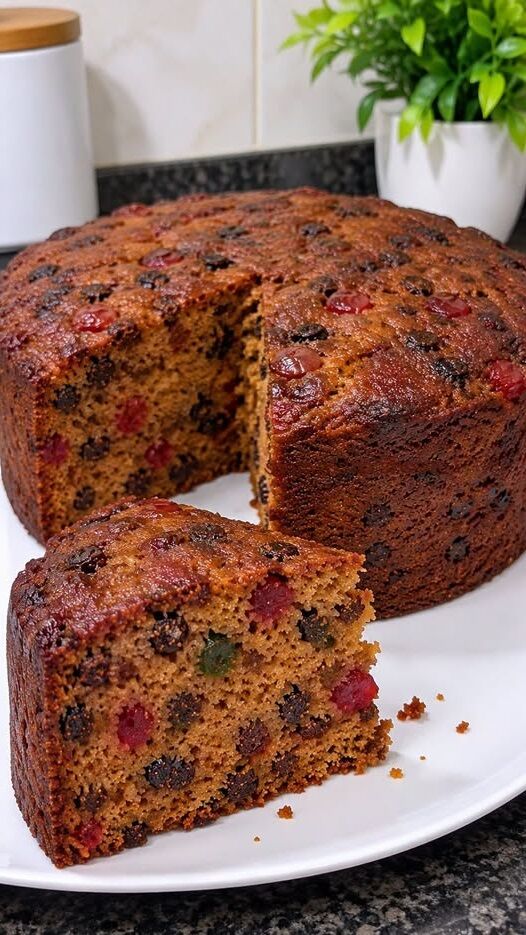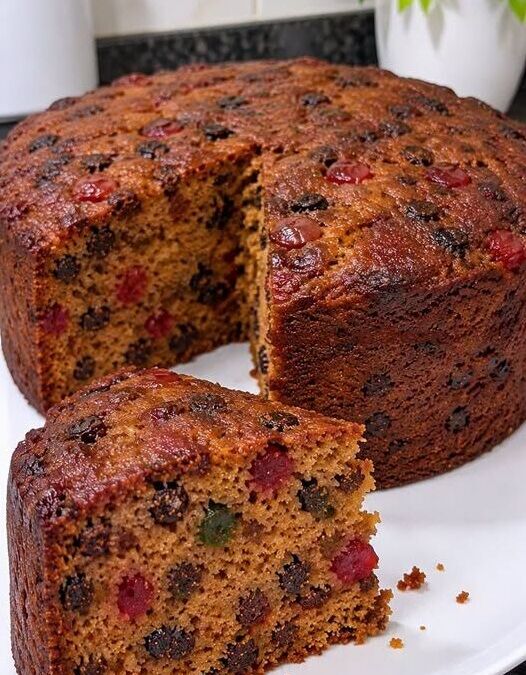
This is the part where an alcohol free Christmas cake behaves differently from the traditional kind, so it is worth reading before you plan your baking week.
Room temperature. Wrap the cold cake tightly in baking paper, then in foil, and keep it in an airtight tin somewhere cool and dark. Eat it within about two weeks. Clemson Extension notes that fruit cake storage times depend on the cake’s ingredients, and that cakes soaked in alcohol keep longer than those without.
Fridge. For longer storage, or if your kitchen is warm, keep it wrapped in the fridge. It will hold for around two to three months. Bring slices back to room temperature before serving, or the butter tastes waxy.
Freezer. It freezes very well for up to 12 months. Wrap it whole, or slice it first and layer baking paper between the slices so you can take out one at a time. Thaw in the fridge overnight, still wrapped.
Check it before you serve it. Without alcohol there is no preservative working in your favour, so look it over each time: discard the cake if you see mould or notice any off smell, which is the guidance Clemson gives.
If you want to keep it moist for longer, brush a tablespoon of orange juice over the top every week or so. Do not overdo it — extra moisture shortens the life of the cake rather than extending it.
Frequently Asked Questions
Do I need to soak the fruit overnight?
No. Simmering it in orange juice for 5 to 8 minutes plumps it just as well. An overnight soak is a tradition built around alcohol, which needs time to work its way in; juice does not.
How far in advance can I make it?
About two weeks ahead if you are keeping it at room temperature, which is the sweet spot for flavour. Longer than that, bake it now and freeze it, then thaw it the day before you need it.
Why did my fruit sink to the bottom?
Usually because the batter was too loose or the fruit was too wet. Drain any pooled juice before folding it in, and toss the fruit in a spoonful of the measured flour first.
Can I use vanilla extract instead?
Most vanilla extract is alcohol-based, so it would undo the point of the recipe. Vanilla sugar or an alcohol-free vanilla flavouring gives you the same warmth with nothing boozy in it.
My cake is browning too fast. What do I do?
Lay a loose sheet of foil over the top after about 90 minutes and carry on baking. Do not raise the oven shelf or lower the temperature mid-bake.
Can I bake it in a different tin?
Yes, but the time changes. Two 1 lb loaf tins take around 1 hour 15 minutes, a 9-inch round takes 15 to 20 minutes less than the 8-inch, and small individual tins take 45 to 55 minutes. Test with a skewer in every case.
Does an alcohol free Christmas cake keep as long as a traditional one?
No, and it is worth being honest about that. Alcohol is part of what makes traditional fruitcake famously long-lived, and the shelf life of an alcohol-free version is shorter. Two weeks at room temperature, or the freezer for anything longer.
Can I leave out the molasses?
Yes. It only deepens the colour and adds a slight bitterness that balances the sweetness. The cake works without it and comes out a shade lighter.
Final Thoughts
A good alcohol free Christmas cake is not a compromise. The things that make a fruit cake worth eating are the dried fruit, the spice, the low slow bake and the dense moist crumb, and none of those depend on alcohol.
What you give up is the long keeping time, which matters far less than people think. Most Christmas cakes are eaten within a fortnight anyway, and this one is ready in an afternoon instead of needing a head start in October.
Bake it, wrap it well, and brush a little orange juice over the top each week until the twenty-fifth.
Which fruit goes into yours — the classic raisins and cherries, or something more unusual? Tell us in the comments.